

I finally got my free trial CGM (continuous glucose monitor) this week, after weeks of waiting. I’ve been very excited to get into the details of my blood sugar, but now that it’s here it’s been a bit of a mixed bag.
The sensor attaches to the rear of your arm, by the tricep muscle, and is designed to simply stay there for 15 days. After initially pairing with my phone via it’s NFC sensor it then provided updates automatically via Bluetooth.
There’s an initial settling period of an hour, after which it looked like I was in the strict
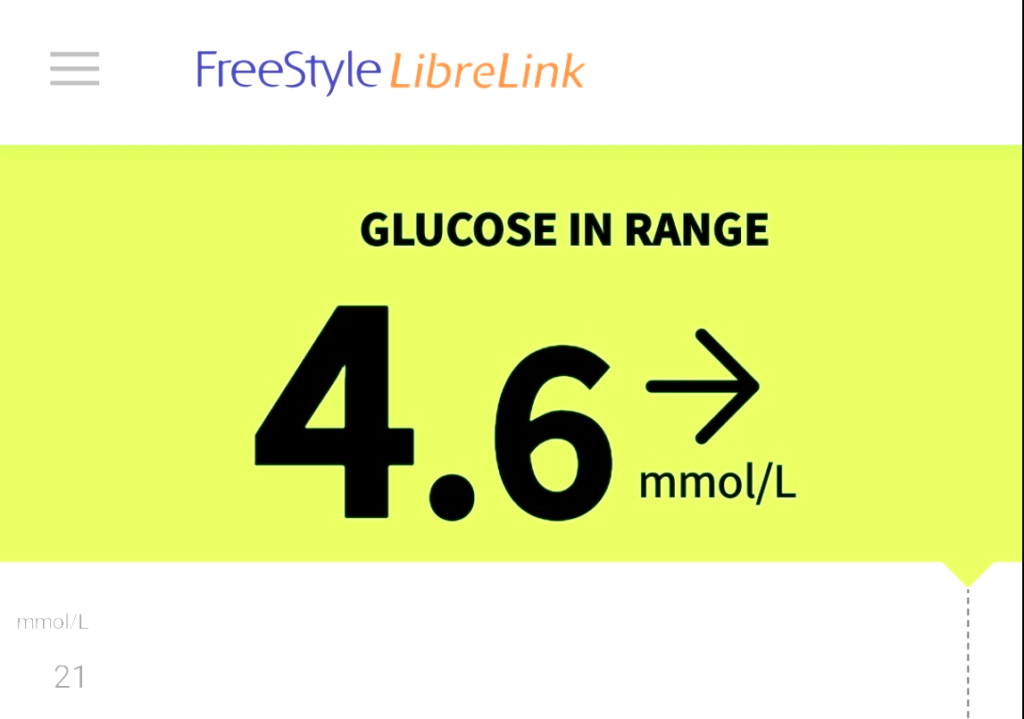
blood sugar “safe” range recommended by Dr Richard Bernstein – which is between 4.6 and 5.5 mmol/L or 83 to 100 mg/dL.
To the right you can see my settled number from last night, 4.6mmol/L (83 mg/dl) which is right at the bottom end of Bernstein’s target, which came as no surprise to me given that I was about 22 hrs into a 36hr fast at that stage!
Worrying blips
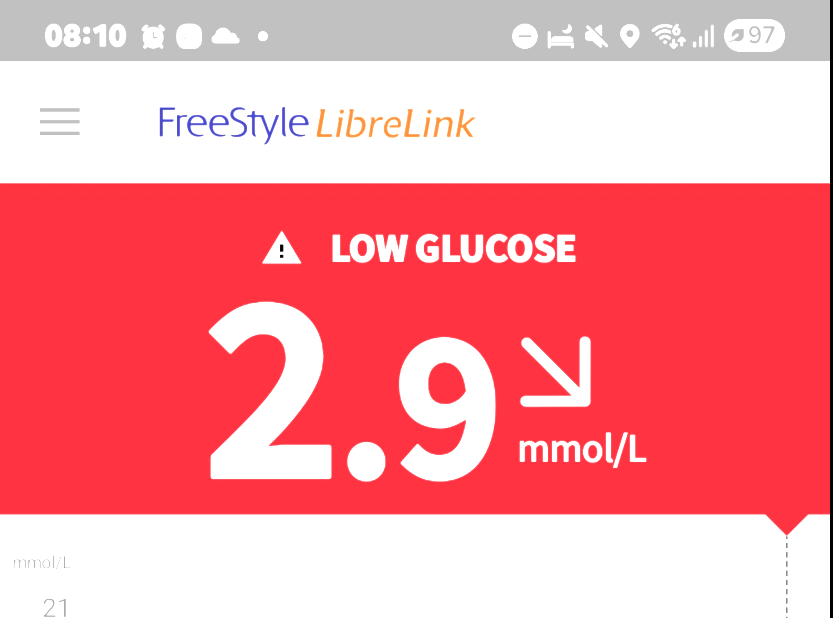
The morning gave me my first worrying blip as I woke up to find my blood sugar apparently dangerously low at 2.9 mmol/L!
In fact, this is a very common phenomenon often seen during sleep, and it certainly can be slightly worrying at first, as it looks like a low sugar hypoglycaemia event, when in fact it’s nothing of the sort.
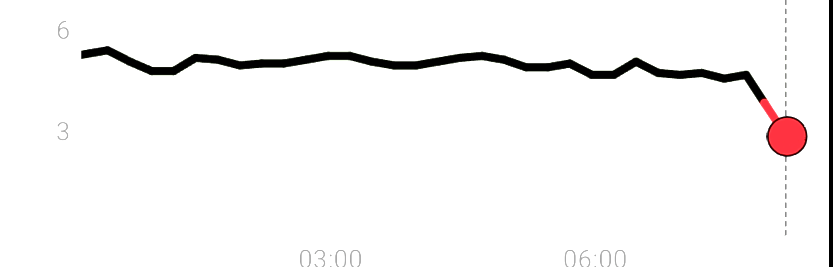
As you can see from the graph to the right, illustrating the progress to this false low, my blood sugar seemed to drop alarmingly rapidly after a very steady and stable period overnight, but in reality, what had happened was I had woken up with my head lying on my left arm, the arm that has the sensor in.
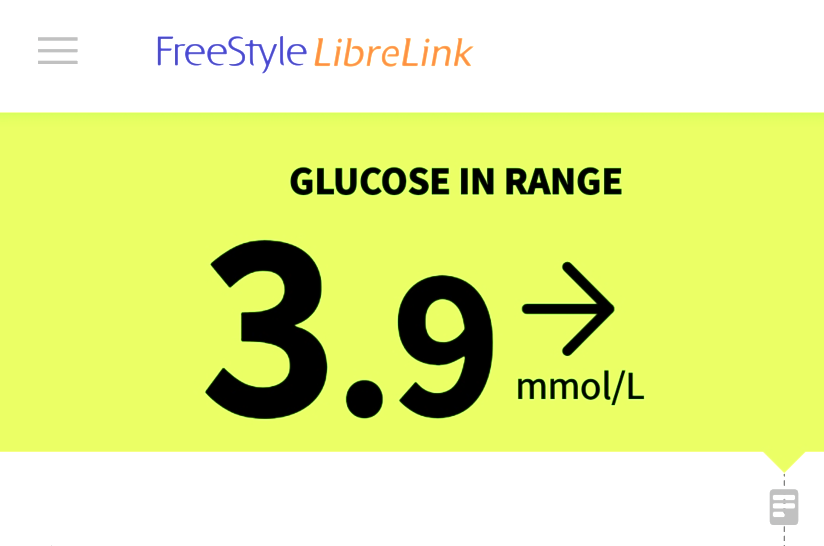
The “compression” caused by the weight of my head on my arm caused the blood in the region to get “stuck,” fooling the sensor into thinking there is low blood sugar. Within a minute of changing position to take the weight off my arm, the numbers recovered to a very healthy 3.9 mmol/L.
Dawn phenomenon
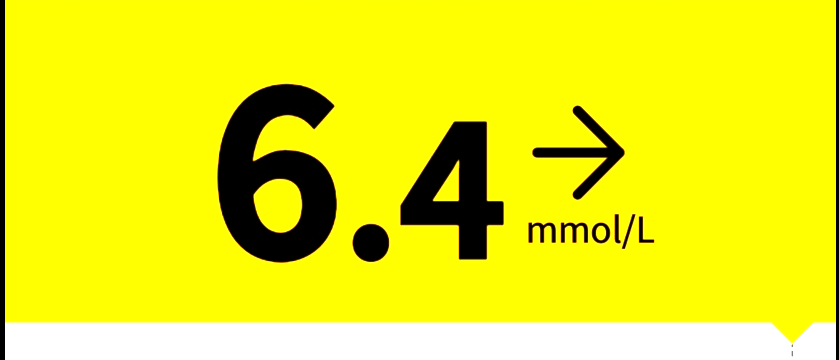
The “compression low” was then followed very shortly after what I took to be just a minor second blip. The inevitable “dawn phenomenon”. This took me up to 6.4 mmol/L (115.2 for the US readers).
This is another standard morning phenomenon, which is part of the body’s normal preparation to wake up – cortisol and glucose are released into the bloodstream to help us wake up and function.
However, this “blip” persisted for most of the day, peaking at over 7!
Now, that being said, I was told to ignore the first day of readings as the sensor stabilises and settles, but also while my body gets used to having what amounts to a permanent foreign object in my arm.
Today has been my second day with the CGM, and is my second full 36hr fast day of the week. This morning the “dawn phenomenon” was much weaker, although I was still surprised to see my levels rise to above the “safe” range for much of the morning – albeit, just hovering above 5.5 mmol/L / 100mg/dL.
While it seems odd that someone fasting could have such high blood sugar, from what I understand, this is not uncommon. Having been aggressilely fasting for many months now alongside eating a strict ketogenic diet while also fuelling regular, intense exercise my body has become “fat adapted”.
What that means is that I am naturally converting my body fat to energy to make up for the loss in dietary carbohydrates. Because my body is very efficient at fuelling me it is keeping me well stocked up to ensure I have enough glucose to deal with any sudden call made for energy by my exercise regime.
This afternoon it has dropped back down to the safety zone – currently around 4.6mmol/L or 83 mg/dL. Hopefully, it will stay that way overnight and tomorrow I’ll get a clearer picture of my “feeding day” baseline.
The plan for my CGM
Now that I have it the plan is to monitor for the two weeks the sensor lasts, first of all getting a clear view of how my regular scheduled activities affect my blood sugar – sleep, exercise, fasting, and eating. And of course, with a special focus on any particular foods that might be spiking my blood sugar more than I might expect.
More updates over the coming days.
Leave a Reply